The Sultan’s Son and the Witch’s Sister

Mother of Witches Part Three

The Sultan’s Son and the Witch’s Sister

There was a sultan who ruled the lands of Zeif in peace and fairness under the bright light of Al’Hatha’s truth. He stood firmly upon the Four Feet of the Dragon, and he had the satisfaction in his later years to see the son of his favored wife prove himself a worthy imitator of those virtues and a worthy heir of his sultanate. Only one matter troubled the old sultan, namely that his son had taken no wife. True enough, generosity, honor, and piety handsomely adorned the young prince, but without family, what does one truly possess? This lamentable deficiency gave the sultan much concern, for his other sons all married powerful houses, daughters of chieftans, pashas, and beygrafs from foreign lands who brought with them rich dowries, exalted titles, and strong alliances.

On an auspicious day, the Sultan said to his son Hussin, for that was his name, “I have consulted the rashaw and learned that you must seek a bride beautiful and powerful beyond all the daughters of Zeif. Do not marry a daughter of Zeif; do not seek a maid of Ekbir, be not seduced by the wiles of a Tusmit woman, and do not look on the dancing girls of Ull. Saddle up your steed, take your men at arms, and go questing into the far-off rebellious land of Ket. Beyond Lopolla, beneath the boughs of that dark forest, take a Ketite maid for wife. Her power and fame will eclipse all the daughters of the Bakluni. Istus has decreed it, and the rashaw has foreseen it.”

Since the young prince was always submissive and obedient to the sultan’s will and since he was much flattered that fate had so favored him with such a magnificent bride surpassing all other women, he consented to undertake the quest. Before departing, he asked, “And how shall I know which girl Istus has decreed for my destiny?”

The sultan said, “Ask the goddess for a specific sign. Let it be the maid that sets before you a princely gift of unmatched beauty. She should be the one Istus has chosen.”

This seemed reasonable to Hussin. He saddled up his steed and took six of his men at Continue reading “The Sultan’s Son and the Witch’s Sister”

The Dragon’s Rest

A Night in Verbobonc and a Dragon’s Hoard

Noel Graham and Greyhawkstories

“A green dragon be one thing, master elf, but ne’er have I seen green dogs before!” Tresea remarked as she set a dark stout in front of the newcomer. Three dogs slept on the taproom floor, curled about the grey elf’s feet, oblivious to the barmaid and all the other traffic in the common room. Tresea eyed their green-fur and brown spots curiously.

“They are called cooshees. They are elven hunting dogs,” the elf explained. He spoke slowly, his words thick with a heavy olven accent.

“For hunting elves are they?” the girl laughed. She flashed a quick smile to punctuate the jest and perhaps to flirt, just a bit, with the handsome blond-haired and hazel-eyed Celenese. She turned to attend to another of her customers, but the grey elf caught her by the wrist before she could move away from his table. The smile on her young face quickly faded to a scowl; she pulled her hand free from the elf’s grasp.

“Your pardon,” the grey elf requested. If the girl had been an elf herself, she might have been just past her first remembrance, perhaps three or four decades, but he guessed that the human girl with the short-bobbed sandy hair had not seen more than sixteen winters. Just a child. “You mentioned a green dragon. I would like to hear the tale.”

“Most would,” the girl said.

Continue reading “The Dragon’s Rest”

Elena the Fair and Natasha the Dark

Mother of Witches Part Two

Elena the Fair and Natasha the Dark

There was once a gentle woman of Bissel with a few drops of Suel blood in her veins, enough to give her a fair head of hair. Despite that, she had a good heart in her chest and a good head on her shoulders. She married a decent Bisselite man, and she bore him a daughter. They called the girl Elena which in the old tongue means “light” or “beautiful.” The girl was both light and beautiful. Those who saw the child remarked, “Isn’t she a fairhead?” But before the child had reached her fifth year, her mother caught a mysterious fever. (Some said a hex had been set upon her.) As she lay dying, she said to her daughter, “Do not be afraid. Keep a pure heart, and no harm will come to you.” She gave her daughter a small wooden doll and said, “This was mine when I was a girl. Take good care of her as I have tried to care for you.”

Elena’s father mourned his wife for a year and a month. After that, he said to his young daughter, “It’s not right that you should be without a mother and I should be without a wife.” He married a Kettite widow who already had two older daughters. He said, “We will combine our families, and all will be well.”

Not all was well for poor Elena. The Kettite woman resented her step-daughter and Continue reading “Elena the Fair and Natasha the Dark”

The Battle of Emridy Meadows

The village of Nulb festers with evil; bandits attack caravans near Hommlet; raiders strike from a new moathouse outside the village, and the menacing shadow of the Temple of Elemental Evil darkens the land. Who will stand against the growing threat?

In the Battle of Emridy Meadows (569 CY), Prince Thrommel IV brought together men, gnomes, elves, and dwarves to win a sweeping victory against overwhelming numbers of goblinkind. The legendary conflict brought the fall of the Temple of Elemental Evil and its associated cult. Download the pdf of The Battle of Emridy Meadows, a classic article by Mike Bridges. Get the inside story of the most significant battle of the sixth century Flanaess.

Iggwilv in the Hut of Baba Yaga

Mother of Witches, Part One

In the Hut of Baba Yaga

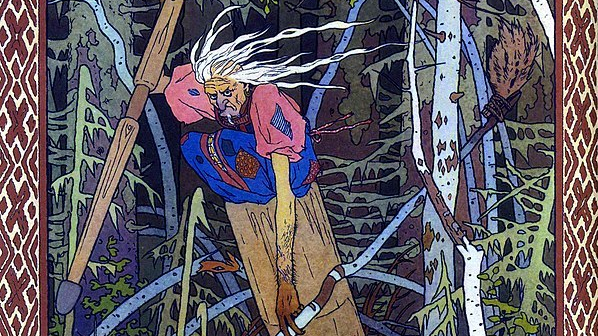
In the lands of Ket, they say that Duhl Parath had three daughters. Kadar, the daughter of Hasnat, Ya’huth, the daughter of Nasri, and Hura, the daughter of the Houri Princess Jedta. When this last one was born, Duhl Parath said, “Have I need of another daughter? The ones I already have trouble me enough.” He tore her away from her mother, rolled her up in a ball, and threw her down to Oerth. Deep in the Bramblewood Forest a Kettite wife gave birth to a squalling girl. The midwife exclaimed, “Oh unhappy woman! This Needfest Godsnight you have borne for your husband a daughter! Would that Istus had smiled on you with a son! He might have made a great name.”

The father of the girl snatched up his newborn daughter and, without a word, took her out to drown her in the river. Continue reading “Iggwilv in the Hut of Baba Yaga”

The Making of Turrosh Mak

by Jeff Mckillop

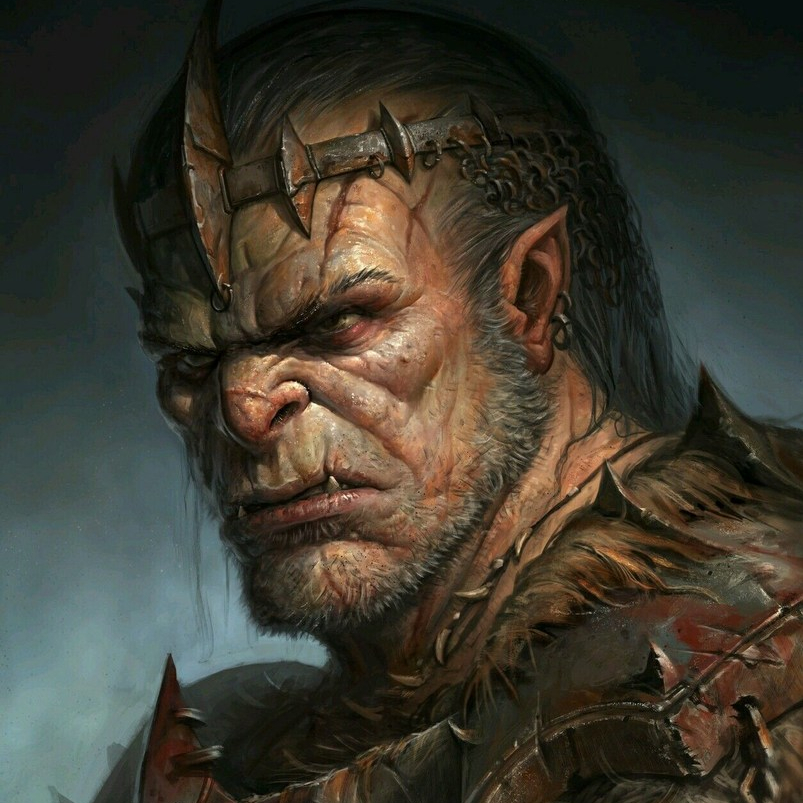
Turrosh Mak was born in 555 CY. He was 14 when he arrived in Greyhawk City in 569. He spent 2 years in the city as a student, but was forced to leave in 571. The primary trait which Turrosh Mak has is a desire to help his own race, i.e. orcs (he doesn’t identify with humans), and other similar humanoids. He feels that not only have then been given a more difficult position within the scheme of things, but the other races conspire to keep humanoids down. He also recognizes what he sees as a self-destructive tendency within humanoid communities, and this, as much as anything else, keeps them from developing a higher form of civilization. He sees himself as having a particular mission, to elevate the humanoids, particularly orcs, above their barbaric, fragmented culture and establish a state of “higher culture” within the humanoid community.

His experience within the humanoid community has taught him that it is their environment which leads humanoids to perpetual barbarism. In those few instances where some have lived apart from this structure, and apart from the human/demi-human cultures which also reinforce humanoid barbarism, they have grown into intelligent, thoughtful, introspective individuals with a high respect for the values of more “civilized” cultures such as integrity, truth, justice, etc. He is not against killing, especially if it is necessary in order to right the “great injustice perpetuated by and upon the humanoid community.” Those are his words.

From the Pomarj Pits

In his early years, before his capture by the Flinds, he learned first-hand about humanoid life. Perhaps it was his half-orc status which allowed him to look upon Continue reading “The Making of Turrosh Mak”